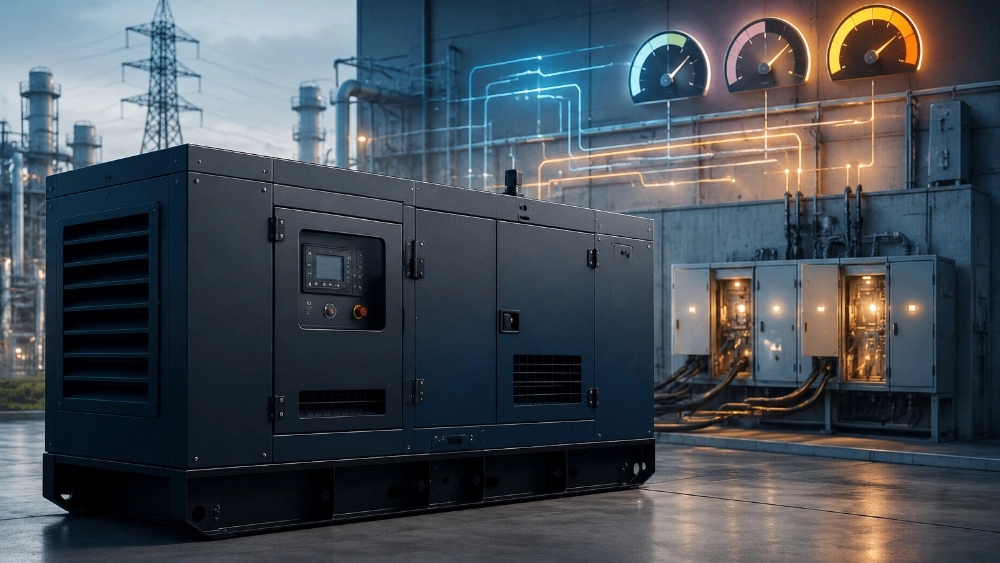
Choosing a suitable power generator is not limited to checking the brand name or the appearance of the device. The most important issue that should be considered before buying and installing is choosing the power of the diesel generator according to the type of consumption, environmental conditions, the number of equipment and the way of operation. If the power of the device is selected less than the required amount, the generator is exposed to overload, temperature increase, premature wear and sudden shutdown. On the other hand, choosing a device with much more capacity than needed can increase fuel consumption, reduce efficiency and impose unnecessary maintenance costs.
The exact power calculation should be done based on the actual information of the consumer equipment. Rated power, starting current, type of load, power factor, operating hours and installation site conditions all have an effect on the final result. For this reason, using the specialized services of a reputable group such as Teklo diesel generator can prevent calculation errors and choosing an inappropriate device.
In this guide, all the necessary points to calculate and choose the right capacity of the generator are examined so that you can make a principled and confident decision according to your industrial, construction, agricultural, commercial or emergency needs.
The importance of choosing the right diesel generator power
Diesel generator must be able to provide the electrical energy needed by the complex in normal conditions and moments of peak consumption. In many projects, only the power consumption of equipment is considered in steady state; While some devices receive a current multiple times their rated current when turned on. If this primary current is not included in the calculations, the possibility of voltage drop, frequency reduction and generator shutdown increases.
Choosing the diesel generator power correctly brings the following benefits:
- Decreasing the possibility of overload and sudden stop of the device
- Increasing the life of the engine and alternator
- Improving fuel consumption efficiency
- Preventing voltage drop when starting the equipment
- Reducing maintenance and repair costs
- Stable supply of electricity required for the set
- Possibility of controlled development of equipment in the future
- Preventing the constant operation of the generator with load Very little
Experts of Teklo diesel generator calculate the required capacity in a specialized way by examining the type of consumption and project characteristics. This evaluation makes the selected device neither weaker than needed nor considered too large and uneconomical.
The difference between emergency power and continuous power
One of the most important issues in the technical specifications of generators is the difference between emergency power and continuous power. Choosing the capacity of the device regardless of the type of operation can reduce the useful life of the engine.
Emergency power or Standby
Emergency power is important when the generator enters the circuit only when the mains power is cut. In this situation, the device operates for limited hours throughout the year and usually the possibility of continuous overloading is not considered for it.
The common applications of emergency power are:
- Residential and office buildings
- Shops and commercial centers
- Medical centers
- Banks and data centers
- Security systems
- Service complexes
Prime power
Prime power is suitable for situations where the generator operates as the main source of electricity during long hours. Construction projects, mines, farms, workshops and places without grid electricity usually need a device with prime functionality.
Continuous power
This capacity corresponds to the continuous operation of the device with an almost constant load. In industries and facilities where the generator must operate without stopping and with a specific load, paying attention to constant power is particularly important.
Therefore, choosing diesel generator power should be done based on the type of operation. A device may be suitable for providing emergency power, but the same device cannot meet the needs of the complex in a long-term operation. Teklo diesel generator takes into account the daily operation period, the amount of load change and the type of use in the calculations when proposing the device.
Steps to calculate the required power of the diesel generator
1. Making a list of consumer equipment
The first step is to register all the equipment that is going to receive electricity from the generator. This list should include lighting, cooling and heating systems, electric motors, pumps, elevators, office equipment, production devices and control systems.
The following information is recorded for each consumer:
- Rated power
- Working voltage
- Single-phase or three-phase
- Rated current
- Starting current
- Power factor
- Number of similar equipment
- Possibility of simultaneous operation
The more accurate the basic information, the more reliable the result of choosing diesel generator power.
2. Checking the equipment specification plate
Information such as power, current, voltage, frequency, efficiency and power factor are usually included on the plate of electric motors and electrical devices. The use of the actual license plate information is much more accurate than the calculation based on guesswork or general values.
If the power of a device is listed in horsepower, the following approximate relationship can be used:
HP≈0.746 kW
3. Calculation of simultaneous loads
All equipment in a set is not always on at the same time. For example, several pumps may work in shifts or a part of the machinery may be used only in one shift. In such a situation, the simple sum of the power of all the devices can show the required capacity too much.
In order to choose diesel generator power, it should be determined which equipment is active at the same time during the busiest time of use. This issue is known as the simultaneity factor.
4. Calculation of starting current
Electric motors, compressors, pumps, chillers and elevators draw high currents during startup. This current may be several times the rated current of the device. Its exact value depends on the type of engine and the starting method.
Common setup methods are:
- Direct startup
- Star-delta
- Soft starter
- Remote control drive
- Step startup
Direct starting usually produces the most initial current. Using a soft starter or a drive can reduce the intensity of the starting current; But the effect of electronic power equipment on the waveform and power quality should also be investigated.
Ignoring this current is one of the most common mistakes in choosing diesel generator power. The generator must be able to withstand the momentary drop caused by starting the engine and keep the voltage and frequency within an acceptable range.
5. Considering the confidence factor
After summing the loads and starting currents, some storage capacity is usually considered. This confidence margin is used to compensate for consumption changes, environmental conditions and possible future development.
The confidence factor should not be chosen excessively. Diesel generators at very low load may face problems such as incomplete combustion, sediment accumulation, reduced efficiency and increased emissions. Therefore, the purpose of storage capacity is to balance sustainability and productivity.
Power calculation formula in single phase system
If the voltage, current and power factor of a single-phase consumer are known, its power is calculated from the following equation:
P=V×I×PF
To convert the result to kilowatts, the obtained value is divided by 1000:
P(kW)=V×I×PF1000
For example, if a device works with a voltage of 220 volts, a current of 20 amps and a power factor of 0.8, its approximate power is equal to:
P=220×20×0.81000=3.52 kW
This value only shows normal working power. If the machine has a motor, the starting current should be checked separately.
Classification of electric charges
Resistive loads
Equipments such as electric heaters, elements, incandescent lamps and some heaters are included in the group of resistance loads. The start-up current of these equipments is usually not much different from the normal operation current, and their calculation is simpler.
Inductive loads
Motors, pumps, compressors, transformers and chillers are inductive loads. These equipments require reactive power and receive a lot of current from the source when starting to operate. The presence of inductive loads has a significant effect on choosing diesel generator power.
Non-linear loads
Computers, switching power supplies, telecommunications equipment, drives, UPS devices, and some electronic systems generate nonlinear loads. These consumers may produce harmonics.
Harmonics can increase the temperature of the alternator, disrupt sensitive equipment and reduce power quality. In projects with a high percentage of non-linear load, only collecting the rated power of the equipment is not enough, and the required power quality must also be checked.
The effect of environmental conditions on output power
The power listed in the generator catalog is usually declared based on standard laboratory conditions. The actual conditions of the installation location may be different and reduce the usable power of the device.
Height above sea level
As the altitude increases, the air density decreases. A diesel engine needs oxygen for combustion, and the reduction of oxygen can limit the output power. If the installation site is located in the heights, it is necessary to modify the capacity.
ambient temperature
High temperature affects the performance of engine, cooling system and alternator. The installation place must have enough ventilation to let the hot air out of the generator space. Increasing room temperature can reduce efficiency and activate protection systems.
Moisture and dust
High humidity, industrial dust and environmental pollution can have a negative effect on filters, engine breathing system and electrical equipment. In such environments, proper design of canopy, filters and maintenance program becomes more important.
For this reason, choosing diesel generator power without visiting or knowing the conditions of the installation site, does not always provide accurate results. The Teklo diesel generator series evaluates the climatic conditions and characteristics of the project environment along with electrical calculations.
The importance of load balancing in three-phase generators
In a three-phase generator, the unbalanced distribution of single-phase consumers between phases can cause an increase in current in one phase, a voltage drop and overheating of the alternator. Even if the total power consumption is less than the rated capacity, severe imbalance may disrupt the device's performance.
To avoid this problem, single-phase loads should be equally divided between three phases as much as possible. The distribution board should also provide the possibility to measure the current of each phase. Examining the load balance is an essential part of system design and choosing diesel generator power.
Selection of capacity for residential and office buildings
In buildings, the main loads usually include elevators, water pumps, lighting, ventilation systems, office equipment, electric doors and security systems. It is not necessary to always keep all the outlets and unnecessary equipment active during a power outage.
Dividing consumers into two essential and non-essential groups makes the required capacity more rational. For example, when the generator is working, you can cut off the power of unnecessary high-consuming equipment and allocate energy to the elevator, emergency lighting and pumps.
In choosing diesel generator power for the building, the way the elevator is set up is very important. The type of elevator motor, the number of stops, the capacity of the cabin, the existence of a drive and the possibility of the pumps working at the same time should be checked.
Capacity selection for factories and workshops
Industrial calculations are more complicated than construction purposes. Welding machines, compressors, cranes, presses, production lines, electric motors and control systems can cause sudden load changes.
In these projects, the equipment start-up schedule should be specified. If several large motors are turned on at the same time, the required capacity increases significantly. Using a step start can reduce the impact on the generator.
Techlo diesel generator experts for industrial projects, in addition to the total load, check the consumption pattern, the sensitivity of the production line to the voltage drop and the harmonic level. Such an approach makes choosing the power of the diesel generator based on the actual performance of the set.
Capacity selection for agriculture and water wells
In the agricultural sector, electropumps are usually the biggest consumers. The power of the pump motor, the depth of the well, the starting method, the length of the cable, the distance between the panel and the motor, and the number of pumps affect the capacity of the device.
Voltage drop in long cables can disrupt engine performance. Choosing the wrong cross-section of the cable may also increase the current and heat up the power transmission path. Therefore, in addition to choosing the power of the diesel generator, the cable, panel, protections and the engine start-up method should also be properly designed.
The role of electrical panel and automatic transmission system
A proper generator cannot provide reliable performance without a standard switchboard. In emergency applications, the automatic transfer switchboard or ATS detects the power outage of the network, issues the command to turn on the generator, and transfers the load to the generator after the voltage and frequency are stabilized.
After reconnecting the mains power, the switchboard returns the load to the mains and the generator turns off after the cooling time. The quality of protective equipment, switches, controller and cabling plays a role in the stability of the whole system.
Teklo diesel generator can check the selection of the generator along with the requirements of the panel, control system and how to connect the load so that all the components of the system are in harmony with each other.
Common mistakes in choosing generator capacity
One of the common mistakes is to sum up the rated power of all the equipment without considering the starting current. Another error is the incorrect conversion of kilowatts to kava or the use of a fixed coefficient for all consumers.
The most important mistakes are:
- Choosing capacity based solely on the area of the building
- Ignoring the starting current of motors
- Not calculating non-linear loads
- Ignoring the height and ambient temperature
- Choosing a very large generator to ensure reliability
- Constantly using the emergency capacity of the device
- Ignoring the future development of the set
- Unbalanced load distribution between phases
- Using Approximate information instead of the equipment plate
- Not checking the voltage drop of the cables
- Starting several big engines at the same time
- Ignoring the fuel quality and service schedule
Prevention of these mistakes is the basis of a basic choice of diesel generator power. Getting expert advice from Teklo Diesel Generator can reduce the risk of making decisions based on incomplete calculations.
Why isn't a bigger generator always a better choice?
Some people think that the higher the capacity of the generator, the better its performance. While the diesel engine must operate within a reasonable load range to achieve proper combustion. Long operation with very low load can cause soot accumulation, incomplete combustion, oil contamination and reduced efficiency.
The purpose of choosing diesel generator power is to find the balance point; It means that the device should work under normal conditions with the right load and at the same time have enough capacity for peak consumption and short-term changes.
Forecasting the future development of the collection
If new machines, office units, pumps or production lines are to be added to the collection in the future, their capacity should be taken into account from the beginning in the design. Of course, the development forecast should be based on the actual plan, not uncertain and far-fetched possibilities.
In some projects, using the ability to parallelize multiple generators can create more flexibility. In this method, as consumption increases, other generators enter the circuit, and when the load decreases, some of them will be removed from the circuit. This solution is useful for sets with wide load changes.
Techlo diesel generator experts can check the possibility of using a device or several parallel generators based on the consumption pattern and development plan.
The role of service and maintenance in maintaining real power
Even if the initial calculations are quite accurate, improper maintenance can reduce the actual power of the device. Clogged air filter, dirty fuel filter, poor quality of oil, weak cooling system and failure of injectors affect engine performance.
Essential maintenance measures include the following:
- Engine oil level and quality check
- Air and fuel filter status check
- Cooling system visit
- Battery and charger check
- Fuel, oil and coolant leakage check
- Periodic test of the device under load
- Output voltage and frequency control
- Electrical connection visit
- Cleaning the entry and exit path Weather
- Recording hours of operation and service records
No-load testing alone is not enough to ensure generator health. The device should be tested at specified intervals under appropriate load to evaluate the performance of the engine, alternator and protection systems.
Criteria for choosing a specialized collection
Capacity calculation, device supply, installation and post-startup services should be considered as a coordinated chain. The provider group must have the ability to analyze the load, check the project conditions and propose a suitable solution.
Teklo Diesel Generator focuses on project technical review, helping customers to use actual equipment information instead of guesswork. The most important evaluation criteria of a specialized collection are:
- Ability to accurately calculate the capacity
- Knowledge of the engine, alternator and controller
- Check the conditions of the installation environment
- Provide a suitable solution for the type of operation
- Pay attention to the start-up flow
- Check the switchboard and power transmission system
- Technical support in the installation and operation stages
- Provide a basic service and maintenance program
- Pay attention to the safety and ventilation requirements
The advantage of using Teklo diesel generator services is that the selection process is not limited to declaring a nominal capacity; Rather, the type of load, duration of operation, environmental conditions, expandability and peripheral equipment also play a role in the final decision.
The final checklist for choosing diesel generator power
Before finalizing the capacity of the device, it is better to check the following:
- The complete list of consumers has been prepared.
- The power and current of the equipment have been recorded on the plate.
- Essential loads have been separated from unnecessary loads. Harmonics are checked.
- Emergency and prime power are not confused with each other.
- Altitude, temperature, humidity and dust are taken into account.
- Load balance between phases is checked.
- Voltage drop of cables is calculated.
- Future development capacity is considered realistically.
- The space for installation, ventilation and smoke exit should be suitable.
This checklist reduces the possibility of errors in choosing diesel generator power and enables safe and stable operation.
summary
Choosing the diesel generator power is one of the most important stages of emergency power system design or permanent power supply. The capacity of the device should be determined based on the actual power of the equipment, power factor, starting current, simultaneity of loads, operating hours and environmental conditions. Relying on approximate calculations or choosing a device based solely on nominal capacity can lead to voltage drop, improper fuel consumption, premature depreciation and equipment downtime.
A small generator is not able to respond to peak consumption, and an excessively large device does not provide optimal performance at low load. Therefore, the appropriate capacity must balance between the required power, margin of confidence and work efficiency.
Teklo diesel generator makes the path of choosing the right device more accurate and reliable with the technical review of electrical loads, type of operation, conditions of the installation site and the development plan of the set. Taking advantage of the specialized analysis of this collection can help to provide stable electricity, increase the life of equipment and reduce operational errors. By performing basic calculations and coordinated design of the generator, switchboard, cable and protection systems, it is possible to ensure the reliable operation of the diesel generator in different conditions.